Zinc is one of the most frequently discussed minerals in male fertility.
You’ll find it in multivitamins, testosterone-support formulas, prostate supplements, and a large percentage of male fertility products. It’s often marketed with impressive claims about sperm count, motility, testosterone, and sexual health.
But does zinc actually improve male fertility?
The answer requires some nuance.
Zinc is unquestionably an essential nutrient involved in normal male reproductive biology. Research has found relationships between zinc status, seminal zinc concentrations, sperm quality, and male fertility.
However, that doesn’t mean taking more zinc automatically produces more sperm.
A man who isn’t getting enough zinc may be in a very different situation from someone who already consumes adequate amounts.
In this guide, we’ll examine what zinc does for male reproductive health, whether it can increase sperm count or motility, how much men need, the best food sources, supplement safety, and what the scientific evidence actually shows.
Quick answer: Zinc is essential for normal sperm development and male reproductive function. Research has found lower seminal zinc concentrations in some infertile men and associations between zinc and semen quality. However, zinc supplements aren’t proven to increase fertility in every man, particularly when zinc intake is already adequate. Excessive supplementation can also cause adverse effects and interfere with copper absorption.
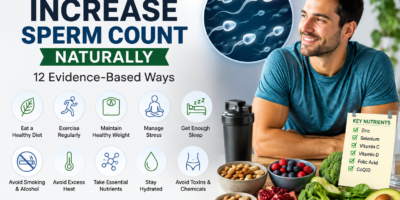
If you’re trying to improve fertility more broadly, start with our guide to how to increase sperm count naturally and our article on what causes low sperm count in men.
What Is Zinc?
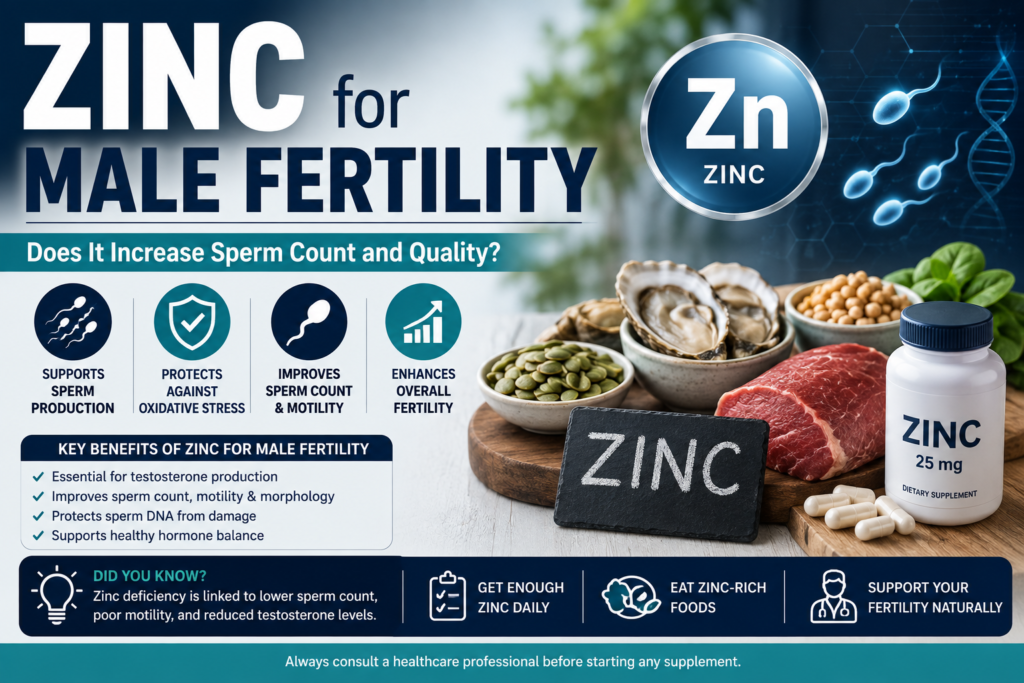
Zinc is an essential trace mineral.
“Essential” means your body needs it but cannot manufacture enough on its own, so you need to obtain zinc through food or supplements.
Zinc participates in numerous biological processes, including:
- DNA synthesis;
- protein synthesis;
- cell division;
- immune function;
- wound healing;
- growth;
- enzyme activity;
- reproductive function.
Male reproductive tissues also contain zinc, and seminal plasma normally contains substantial concentrations of the mineral.
This biological connection is one reason researchers have studied zinc and male fertility for decades.
Why Is Zinc Important for Male Fertility?
Producing functional sperm is a complex process.
Developing sperm cells undergo substantial changes before they are capable of participating in fertilization.
Zinc has been investigated for potential roles involving:
- spermatogenesis;
- sperm maturation;
- sperm membrane stability;
- sperm motility;
- antioxidant defense;
- testosterone metabolism;
- DNA integrity;
- and fertilization.
A scientific review published in Scientific Reports described zinc as an important element for male fertility and discussed its roles in sperm quality and fertilization.
However, biological importance should not be confused with proof that high-dose supplementation improves fertility.
Water is essential for survival too, but drinking five times more water doesn’t make you five times healthier.
The same principle applies to micronutrients.
Is Zinc Found in Semen?
Yes.
Zinc is present in seminal plasma, with much of it contributed by the prostate.
Researchers have investigated seminal zinc concentrations because of possible relationships with:
- sperm concentration;
- motility;
- morphology;
- antioxidant protection;
- and reproductive function.
A systematic review and meta-analysis examining zinc levels in seminal plasma reported significantly lower seminal zinc concentrations among infertile men compared with controls.
The analysis also found evidence suggesting zinc supplementation may improve certain semen parameters in some infertile men.
That is interesting evidence.
But it still doesn’t mean every man trying to conceive should automatically take high-dose zinc.
Does Zinc Increase Sperm Count?
Possibly in some circumstances, but not universally.
This is the most important distinction to understand.
If a man has inadequate zinc status, correcting that inadequacy could plausibly support normal reproductive function.
But if zinc intake and status are already adequate, taking substantially more zinc doesn’t necessarily make the testes produce dramatically more sperm.
Studies investigating zinc supplementation have produced mixed results depending on:
- population;
- baseline fertility;
- baseline zinc status;
- supplement dose;
- duration;
- other nutrients used;
- and study design.
Therefore, the claim:
“Zinc increases sperm count.”
is too broad.
A more accurate statement is:
Zinc is necessary for normal male reproductive function, and zinc status may influence semen quality, but supplementation isn’t guaranteed to increase sperm count in every man.
If sperm concentration is low, it’s also important to investigate the underlying cause rather than assuming zinc deficiency.
Our guide to what causes low sperm count in men explains why factors such as varicocele, hormones, testosterone therapy, anabolic steroids, genetics, medications, illness, and lifestyle may also be involved.
Does Zinc Improve Sperm Motility?
Zinc has also been studied in relation to sperm movement.
Motility matters because sperm need to travel through the female reproductive tract to participate in natural fertilization.
Research has associated zinc with several aspects of sperm function, and some supplementation studies have reported improvements in motility.
However, low sperm motility can have many causes.
These include:
- varicocele;
- oxidative stress;
- smoking;
- obesity;
- excessive heat;
- genetic factors;
- infections;
- testicular dysfunction;
- and other reproductive conditions.
Zinc can’t be expected to correct every one of those problems.
For a broader approach, see our guide on how to improve sperm motility naturally.
Does Zinc Improve Sperm Morphology?
Sperm morphology refers to sperm shape and structure.
Some research has investigated associations between zinc status and morphology, but morphology is influenced by numerous biological factors.
It would therefore be inaccurate to promise that zinc supplementation will normalize abnormal morphology.
When several semen parameters are abnormal simultaneously, professional evaluation is generally more useful than focusing on one nutrient.
Does Zinc Increase Semen Volume?
This claim is extremely common online.
The reasoning usually goes like this:
The prostate contains zinc → the prostate contributes seminal fluid → zinc supplements must increase semen volume.
Biology isn’t that simple.
Zinc is important for normal prostate and reproductive function, but there isn’t strong evidence that taking extra zinc will dramatically increase ejaculate volume in men who already have adequate nutritional status.
Semen volume can be influenced by factors including:
- abstinence duration;
- hydration;
- age;
- reproductive-gland function;
- ejaculation frequency;
- medications;
- and certain medical conditions.
If you’re specifically interested in ejaculate volume, our SemEnhance review examines a product marketed within the broader semen-enhancement category.
Does Zinc Increase Testosterone?
Zinc and testosterone have an interesting relationship.
Severe zinc deficiency may negatively affect normal endocrine and reproductive function.
Some studies have found that correcting zinc deficiency can improve testosterone status.
But this doesn’t establish that high-dose zinc is a testosterone booster for every healthy man.
If your zinc intake is already sufficient, taking increasingly larger doses shouldn’t be expected to continuously raise testosterone.
The better interpretation is:
adequate zinc supports normal physiological function.
That’s very different from:
more zinc = more testosterone.
Does Low Zinc Affect Testosterone?
Potentially.
Because zinc participates in numerous enzymatic and hormonal processes, inadequate zinc status may negatively affect reproductive function.
Older human research has observed relationships between zinc restriction and testosterone levels.
However, low testosterone itself has many potential causes.
These can include:
- obesity;
- pituitary disorders;
- testicular disorders;
- medications;
- chronic illness;
- sleep problems;
- aging;
- and other endocrine conditions.
If testosterone is genuinely low, don’t automatically assume zinc is the cause.
Can Zinc Deficiency Affect Male Fertility?
Potentially.
A true nutritional deficiency can interfere with normal physiological processes.
Zinc deficiency may arise from:
- inadequate dietary intake;
- malabsorption;
- gastrointestinal disorders;
- certain restrictive diets;
- chronic medical conditions;
- or other factors affecting zinc absorption or metabolism.
Because zinc is involved in reproductive biology, inadequate status could potentially contribute to impaired reproductive health.
But male infertility should not automatically be diagnosed as zinc deficiency.
What Are the Signs of Zinc Deficiency?
Possible signs and consequences of significant zinc deficiency can include:
- impaired immune function;
- delayed wound healing;
- changes in taste or smell;
- hair loss;
- skin problems;
- appetite changes;
- growth problems in children;
- and reproductive effects.
However, these symptoms aren’t specific to zinc deficiency.
You shouldn’t diagnose a deficiency based on symptoms alone.
If deficiency is suspected, a healthcare professional can evaluate your diet, medical history, and whether testing or supplementation is appropriate.
How Much Zinc Do Men Need?
According to the U.S. National Institutes of Health Office of Dietary Supplements, the Recommended Dietary Allowance for adult men is:
11 mg of zinc per day.
That represents total daily intake from food and supplements.
Individual requirements can vary depending on factors such as:
- age;
- dietary pattern;
- absorption;
- health conditions;
- and other circumstances.
Importantly, an RDA isn’t the same thing as a fertility-treatment dose.
The fact that some fertility studies use higher doses doesn’t mean everyone should copy those doses indefinitely.
What Is the Upper Limit for Zinc?
For adults, the U.S. tolerable upper intake level for zinc is:
40 mg per day
from all sources unless higher intake is being used under appropriate medical supervision.
This matters because many men’s supplements contain substantial zinc.
Imagine taking:
- a multivitamin;
- a testosterone supplement;
- a fertility supplement;
- and a prostate supplement.
If each contains zinc, your total intake can become much higher than you realize.
Always check the labels of products you’re combining.
What Happens If You Take Too Much Zinc?
High zinc intake can cause problems.
Short-term excessive intake may cause:
- nausea;
- vomiting;
- abdominal cramps;
- diarrhea;
- headaches;
- loss of appetite.
Long-term excessive intake can interfere with copper absorption.
This may contribute to:
- copper deficiency;
- anemia;
- neurological problems;
- altered immune function;
- and changes in lipid metabolism.
This is an excellent example of why “more” isn’t automatically healthier.
Can Too Much Zinc Hurt Fertility?
Potentially.
The body depends on nutritional balance.
Extremely high zinc intake can disrupt other nutrients, particularly copper.
And excessive exposure to many substances—including essential nutrients—can have undesirable biological effects.
Therefore, taking large doses of zinc simply because fertility is the goal isn’t a sensible strategy.
Best Foods High in Zinc
Many men can obtain substantial zinc through diet.
Good sources include:
Oysters
Oysters are among the richest natural dietary sources of zinc.
Beef
Beef provides highly bioavailable zinc along with protein, iron, vitamin B12, and other nutrients.
Other Meat
Pork and other meats can contribute meaningful amounts of zinc.
Poultry
Chicken and turkey provide zinc alongside protein.
Seafood
Crab and certain other shellfish can be good sources.
Dairy Products
Milk, cheese, and yogurt contribute zinc.
Eggs
Eggs provide smaller amounts of zinc along with protein and several other nutrients.
Beans
Beans and lentils contain zinc, although absorption from plant foods may be lower because of phytates.
Nuts and Seeds
Pumpkin seeds, cashews, and other nuts and seeds contribute zinc.
Whole Grains
Whole grains also provide zinc, although phytates can reduce absorption.
A varied diet is generally preferable to relying on one food.
Is Zinc From Food Better Than Supplements?
For men who can meet their nutritional requirements through food, dietary zinc has several advantages.
Whole foods provide zinc alongside other nutrients.
For example, seafood may also provide:
- selenium;
- protein;
- omega-3 fatty acids;
- vitamin B12.
Nuts and seeds may provide:
- magnesium;
- healthy fats;
- vitamin E;
- fiber.
Supplements can be useful when dietary intake is inadequate or when a healthcare professional recommends them.
But supplements aren’t automatically superior.
Which Form of Zinc Is Best?
Supplement labels may list different forms, including:
- zinc gluconate;
- zinc citrate;
- zinc picolinate;
- zinc acetate;
- zinc sulfate;
- zinc oxide.
Different forms contain different percentages of elemental zinc and may differ somewhat in absorption and gastrointestinal tolerability.
The most important number on a supplement facts panel is usually the amount of elemental zinc provided.
Don’t assume a complicated-sounding form automatically makes a supplement clinically superior for fertility.
Zinc vs. Selenium for Male Fertility
Zinc and selenium are both essential trace minerals, but they perform different biological functions.
Zinc
Has roles involving:
- sperm development;
- DNA and protein synthesis;
- reproductive function;
- immune function;
- and numerous enzymes.
Selenium
Is incorporated into selenoproteins involved in:
- antioxidant defense;
- thyroid metabolism;
- and reproductive biology.
Both are commonly included in fertility supplements.
One isn’t necessarily “better” than the other.
And both illustrate the same nutritional principle:
too little can be problematic, but excessive intake isn’t desirable either.
Our upcoming article on selenium for male fertility examines selenium separately.
Zinc vs. CoQ10 for Sperm Health
CoQ10 and zinc work very differently.
Zinc is an essential mineral.
CoQ10 is a naturally occurring compound involved in mitochondrial energy production and antioxidant activity.
CoQ10 has attracted particular interest in studies of sperm motility because sperm movement requires substantial energy.
Some male fertility formulas combine both.
However, no universal evidence establishes that every man with infertility should take either ingredient.
Zinc vs. L-Carnitine for Sperm Motility
L-carnitine plays an important role in fatty-acid transport and cellular energy metabolism.
It is present at relatively high concentrations within parts of the male reproductive tract and has been investigated in relation to sperm maturation and motility.
Zinc, by contrast, is involved in numerous structural, enzymatic, and reproductive processes.
Because they work through different biological pathways, comparing them as if one must be “the winner” oversimplifies the research.
Should You Combine Zinc and Selenium?
Many male fertility products do.
For example, Fertility Factor 5 contains both zinc and selenium alongside Tongkat Ali, Panax ginseng, and BioPerine.
Combining the two isn’t inherently problematic when doses remain appropriate.
But you need to consider total daily intake.
If your fertility supplement contains zinc and selenium and your multivitamin also contains zinc and selenium, you’re consuming both from multiple sources.
Add dietary intake, and totals rise further.
This is why reading supplement labels matters.
Zinc in Male Fertility Supplements
Zinc is one of the most common ingredients in male fertility formulas.
That makes biological sense.
But don’t evaluate a fertility supplement based solely on whether the label says “zinc.”
Consider:
- zinc dose;
- form;
- total formula;
- ingredient transparency;
- evidence supporting the doses;
- manufacturing quality;
- safety;
- and whether the finished product itself has been studied.
A supplement can contain scientifically interesting ingredients without the complete formula being clinically proven.
For product comparisons, see our men fertility supplements to increase sperm count, motility and volume guide.
Zinc in Fertility Factor 5
Fertility Factor 5 is marketed as a male fertility supplement and includes zinc as part of a five-ingredient formula.
The formula combines:
- Tongkat Ali;
- zinc;
- selenium;
- Panax ginseng;
- BioPerine.
There is scientific research related to several of these ingredients.
However, evidence for individual ingredients should not automatically be interpreted as proof that the complete commercial formula treats infertility.
Our Fertility Factor 5 review examines each ingredient separately and distinguishes ingredient-level evidence from product-specific claims.
Zinc and Prostate Health
Zinc isn’t relevant only to fertility.
The prostate contains relatively high concentrations of zinc compared with many other tissues.
This has led researchers to investigate zinc in relation to prostate biology and disease.
However, this doesn’t mean high-dose zinc supplementation prevents prostate problems.
Men interested in prostate health should consider the broader evidence rather than treating zinc as a standalone solution.
For supplement-specific information, read our PrimeGENIX Prostate Support review.
Does Zinc Improve Libido?
Zinc is sometimes marketed as a libido booster.
The reality is more nuanced.
If zinc deficiency contributes to poor health or hormonal dysfunction, correcting the deficiency could potentially improve aspects of wellbeing.
But there isn’t good evidence that taking large amounts of zinc turns healthy men with adequate zinc status into dramatically more sexually driven individuals.
Libido is influenced by:
- testosterone;
- mental health;
- relationship factors;
- stress;
- sleep;
- medications;
- physical health;
- sexual function;
- and many other variables.
Does Zinc Improve Erections?
Zinc isn’t an established treatment for erectile dysfunction.
Erections depend heavily on:
- vascular health;
- nitric oxide signaling;
- nerve function;
- hormones;
- psychological factors;
- and overall health.
A zinc deficiency may contribute indirectly to poor health, but taking zinc isn’t equivalent to treating the underlying cause of ED.
Persistent erectile difficulties deserve appropriate evaluation, particularly because ED can sometimes be associated with cardiovascular or metabolic disease.
Can Zinc Improve Semen Taste?
There’s little reliable scientific evidence showing that zinc supplementation meaningfully improves semen taste.
Semen composition is complex.
Claims about specific supplements dramatically changing semen flavor are often based more on marketing or anecdote than controlled clinical evidence.
Our SemEnhance review discusses a commercial product marketed specifically around semen taste and related claims.
How Long Does Zinc Take to Affect Sperm?
Don’t expect overnight changes.
Sperm production and maturation take place over an extended period.
Therefore, even when a nutritional intervention influences sperm biology, meaningful changes would generally be expected over weeks or months rather than a few days.
This is why a supplement promising to dramatically transform sperm count within several days deserves skepticism.
We’ll examine the timeline more closely in our upcoming guide on how long it takes to improve sperm quality.
Should You Take Zinc Before Trying to Conceive?
Adequate zinc intake is important whether or not you’re trying to conceive.
But “adequate” is the key word.
If your diet already supplies enough zinc, high-dose supplementation may not provide additional reproductive benefit.
A more comprehensive preconception strategy for men includes:
- not smoking;
- limiting heavy alcohol use;
- avoiding anabolic steroids;
- discussing testosterone use with a doctor;
- maintaining a healthy weight;
- exercising regularly;
- eating a nutrient-dense diet;
- sleeping adequately;
- limiting unnecessary excessive testicular heat;
- and addressing medical conditions.
A zinc pill shouldn’t replace these fundamentals.
Should You Test Your Zinc Level?
Routine zinc testing isn’t necessary for every man trying to conceive.
Testing may be considered when there is reason to suspect deficiency, such as:
- malnutrition;
- restrictive diet;
- malabsorption;
- gastrointestinal disease;
- certain chronic illnesses;
- or symptoms consistent with deficiency.
Interpreting zinc status can also be more complicated than simply reading one blood result.
A healthcare professional can determine whether testing is useful in your circumstances.
What If Your Sperm Count Is Still Low Despite Taking Zinc?
Don’t keep increasing the dose.
If sperm concentration remains low, the next question should be:
What is actually causing the low sperm count?
Potential causes include:
- varicocele;
- hormonal disorders;
- genetic abnormalities;
- testosterone therapy;
- anabolic steroid use;
- testicular damage;
- infections;
- medications;
- obesity;
- smoking;
- environmental exposures;
- and unexplained infertility.
Our guide to what causes low sperm count in men covers these possibilities in detail.
Persistent abnormalities deserve proper evaluation rather than indefinite supplement experimentation.
When Should You See a Fertility Specialist?
Consider professional evaluation if:
- you’ve been trying unsuccessfully to conceive;
- sperm concentration is substantially reduced;
- sperm motility is severely impaired;
- multiple semen parameters are abnormal;
- no sperm are found;
- you have testicular pain or swelling;
- you’ve used anabolic steroids;
- you’re taking testosterone;
- you have a history of testicular injury;
- you’ve received chemotherapy or radiation;
- or you have known hormonal or reproductive problems.
A semen analysis provides far more useful information than guessing about fertility based on symptoms.
The Bottom Line
Zinc deserves its reputation as an important male reproductive nutrient.
It participates in numerous processes relevant to:
- sperm production;
- sperm maturation;
- sperm function;
- reproductive hormones;
- DNA synthesis;
- and fertilization.
Research has also found differences in seminal zinc concentrations between some fertile and infertile men.
But none of this means:
more zinc = more sperm.
If you’re deficient or consuming inadequate zinc, correcting that problem may support normal reproductive health.
If you’re already getting enough zinc, high-dose supplementation isn’t guaranteed to increase sperm count, motility, testosterone, semen volume, or fertility.
And excessive zinc can create genuine health problems, including copper deficiency.
The goal should therefore be adequate zinc within a comprehensive fertility strategy, not megadosing one mineral.
Frequently Asked Questions
Is zinc good for male fertility?
Yes, zinc is an essential nutrient involved in normal male reproductive function, sperm development, and numerous cellular processes. However, zinc supplementation isn’t guaranteed to improve fertility in every man.
Does zinc increase sperm count?
Some research suggests zinc supplementation may improve sperm concentration in certain populations, particularly where zinc status is relevant. However, it isn’t a universal treatment for low sperm count.
Does zinc improve sperm motility?
Zinc is involved in normal sperm biology, and some studies have reported associations or improvements involving motility. Results vary, and low motility can have many different causes.
How much zinc should a man take daily?
The NIH lists an RDA of 11 mg/day for adult men. The tolerable upper intake level for adults is 40 mg/day from all sources unless otherwise directed by a healthcare professional.
Is 50 mg of zinc too much?
Fifty milligrams per day exceeds the U.S. adult tolerable upper intake level of 40 mg/day. Long-term high-dose zinc can interfere with copper absorption and cause other adverse effects.
Can zinc increase testosterone?
Adequate zinc is important for normal hormonal function, and correcting zinc deficiency may influence testosterone. High-dose zinc isn’t proven to continuously raise testosterone in men who already have adequate zinc status.
Does zinc increase semen volume?
There isn’t strong evidence that taking extra zinc reliably increases ejaculate volume in zinc-sufficient men.
Does zinc make sperm thicker?
Semen consistency isn’t a reliable measure of sperm concentration or fertility, and zinc shouldn’t be taken specifically to make semen appear thicker.
Which foods contain the most zinc?
Oysters are particularly rich in zinc. Other useful sources include beef, seafood, poultry, dairy products, beans, nuts, seeds, eggs, and whole grains.
Is zinc or selenium better for sperm?
Both are essential nutrients with different biological roles. Neither can universally be considered “better” for male fertility.
Can I take zinc and selenium together?
They are commonly combined in supplements, but total daily intake matters. Check all supplement labels to avoid unnecessarily high intake.
How long should I take zinc for sperm health?
There is no universal fertility-specific duration. Sperm development takes weeks to months, but supplementation should depend on nutritional needs, dose, safety, and professional advice where appropriate.
Can too much zinc reduce fertility?
Excessive zinc can cause toxicity and disrupt copper status and other physiological processes. More zinc isn’t automatically better for reproductive health.
Should every man trying to conceive take zinc?
No. Every man needs adequate zinc nutrition, but that doesn’t mean every man needs a zinc supplement.
Related Articles on Fitness Donkey
Scientific Sources & References
- NIH Office of Dietary Supplements — Zinc Fact Sheet for Health Professionals
- NCBI/PMC — Zinc Is an Essential Element for Male Fertility: A Review of Zn Roles in Men’s Health, Sperm Quality, and Fertilization
- NCBI/PMC — Zinc Levels in Seminal Plasma and Their Correlation With Male Infertility: A Systematic Review and Meta-Analysis
- PubMed — A Systematic Review and Evidence-Based Analysis of Ingredients in Popular Male Fertility Supplements
- American Urological Association — Diagnosis and Treatment of Infertility in Men: AUA/ASRM Guideline
- World Health Organization — WHO Laboratory Manual for the Examination and Processing of Human Semen, 6th Edition
- NCBI/PMC — Lifestyle Causes of Male Infertility
Medical Disclaimer
This article is for informational and educational purposes only and isn’t intended to diagnose, treat, cure, or prevent infertility, zinc deficiency, or another medical condition.
Nutrient requirements and fertility problems vary between individuals. Excessive zinc supplementation can cause adverse effects and nutrient imbalances. If you have abnormal semen-analysis results, suspected nutritional deficiency, or persistent difficulty conceiving, consider discussing your situation with an appropriately qualified healthcare professional.